
COMMERCIALIZATION ENGINE
Data Challenges
Real problems from growers, named by industry, solved with shared data and compute — and piloted in the field.
ACTIVE
Orchard Stress
In Progress
COMPLETED
Frost Risk
November 2025
CURRENT CHALLENGE
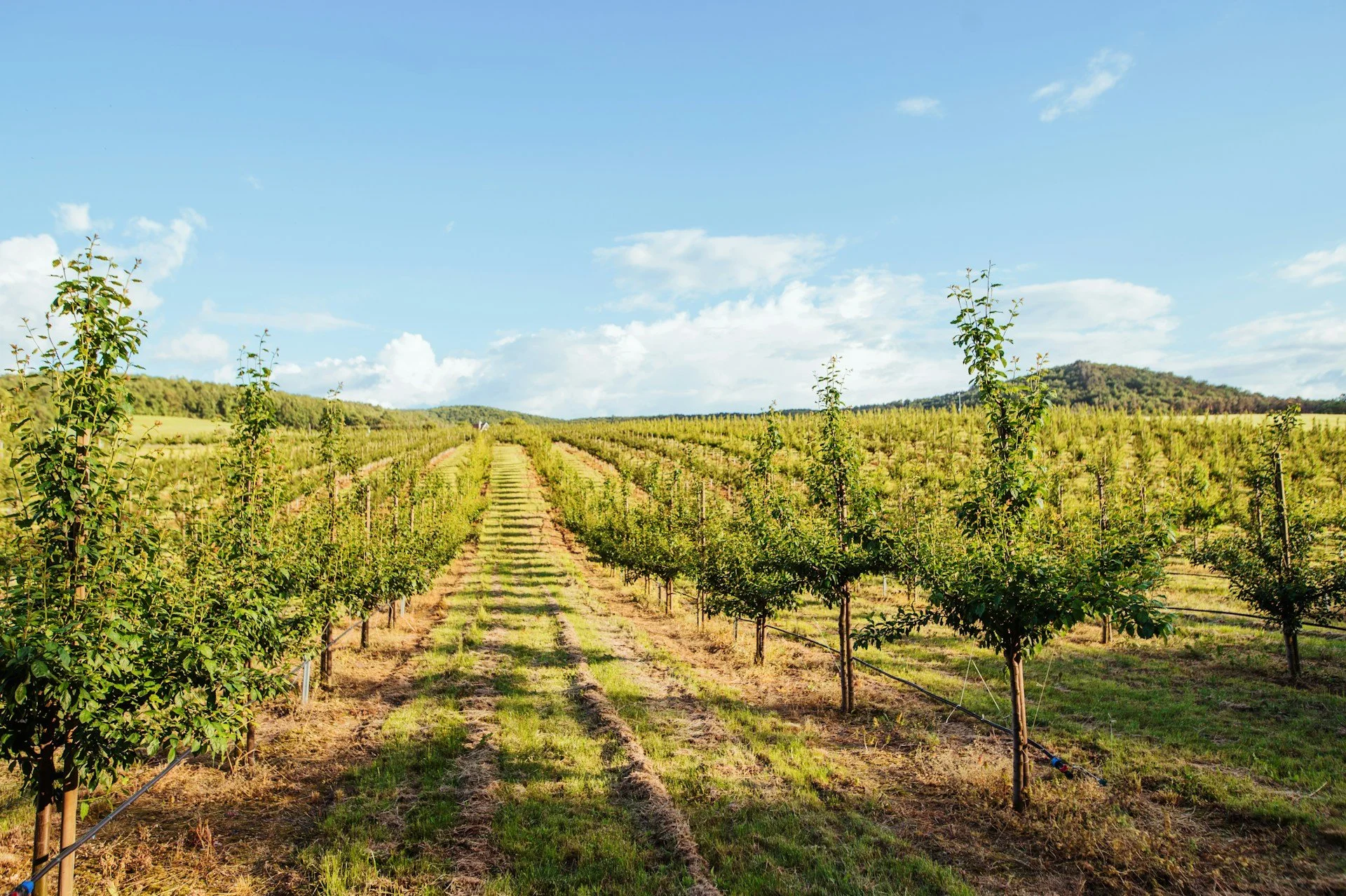
ORCHARD STRESS MAPPING
Participants use free satellite imagery to detect and map underperforming zones in Central Valley orchards. The four-week sprint kicks off shortly — registration is open now, with workshops and judging seats also available.
TIMELINE
4 week sprint
COST
Free
CASH PRIZE
$1,500+
GET INVOLVED
Choose your role in the challenge.
There are three ways to take part. Pick the one that matches what you bring.
FOR TEAMS & INDIVIDUALS
Compete in the sprint.
Undergrad teams, graduate researchers, faculty, and independent builders. Use real Central Valley data and the AI Supercomputing Center's compute to develop a working solution over four weeks.
ALSO FOR PARTICAPANTS
FOR EXPERTS
Review submissions.
FOR GROWERS & COMPANIES
Solve your problem.
HOW THE DATA CHALLENGE WORKS
Three stages, one cycle, built for deployment.
Each challenge follows the same arc — from a problem named by industry, through model development on shared compute, to validated pilots in the field.
01 / IDENTIFY
A real problem, named by industry.
Undergrad teams, graduate researchers, faculty, and independent builders. Use real Central Valley data and the AI Supercomputing Center's compute to develop a working solution over four weeks.
02 / BUILD
Teams develop solutions on shared compute.
Interdisciplinary teams — undergrads, graduate students, faculty, independent researchers — build models using real-world data and the Supercomputing Center's infrastructure.
03 / DEPLOY
Top solutions move into the field.
Validated submissions are piloted with growers in the Central Valley. Leading teams may be considered for commercialization cohorts and the Innovation Grant program.
WHY WE BUILT THE SUPERCOMPUTING CENTER
Most agricultural problems aren't solved by code alone.
A small ag-tech startup can't afford a GPU cluster. A graduate student can't license the datasets. A grower doesn't have the bandwidth to run a research project. The Supercomputing Center exists so a problem named on Monday by a Madera County orchardist can be modeled on Tuesday by a CSU Fresno team — on infrastructure that would otherwise cost six figures to access.
INFRASTRUCTURE
San Diego Supercomputer Center at UC San Diego provides cyberinfrastructure and AI systems architecture.
HOST
California State University, Fresno hosts and operates the physical compute environment.
LEADERSHIP
F3 Innovate leads the center, its programs, and workforce development partnerships.
PRIORITY ACCESS
California-based startups, researchers, and educators in agriculture and biotech — with priority for Central Valley users.
ARCHIVE
01 — FROST RISK · 2025
Previous Challenges

NOVEMBER 2025
Forecasting Frost Before It Hits
Frost is one of California agriculture's most damaging weather risks. University teams developed predictive models using localized microclimate data — supported by the San Diego Supercomputing Center and the National Data Platform.
WINNING TEAMS
1st
FrostByte
$1,500
San Jose State University
2nd
$750
Tyler Aziz
UC Davis + Cal Poly SLO
3rd
$400
AgriFrost AI
Independent Contributor
BUILT WITH
A multi-institution partnership spanning advanced computing, biological modeling, and workforce development across California.
San Diego Supercomputer Center
UC SAN DIEGO
CSU Fresno
HOST INSTITUTION
National Data Platform
DATA INFRASTRUCTURE